Microduck Robots Surge in Preorders
A viral keynote demo has propelled open-source duck robots to the top of holiday consumer demand.
By Natalia Campos ·
The holiday toy market just found its breakout star.
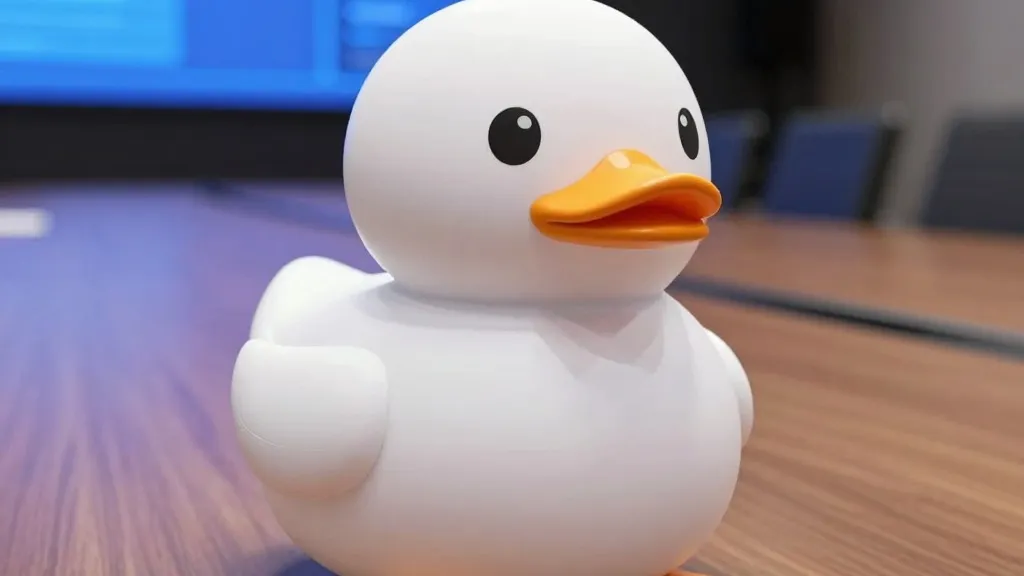
Jensen Huang, chief executive of Nvidia, demonstrated a flock of small, autonomous duck robots during his keynote address at the GTC Berlin conference earlier this week. The footage, which quickly spread across social media platforms, showed the devices performing synchronized movements, including walking, sitting, and even simulating sleep by falling over. The robots, known as Microducks, also produced mechanical sounds reminiscent of the droid from the Star Wars franchise. By the following day, the novelty had translated directly into commercial traction, with preorders for the devices surpassing 20,000 units, according to Clem Delangue, the head of Hugging Face.
The rapid uptake positions the Microducks as a potential market leader for the upcoming holiday season. Delangue suggested that these units could become the best-selling robot of the year, a claim that may extend beyond the traditional children’s toy demographic. Promotional materials highlight adult consumers interacting with the devices, indicating a broader appeal that drives current sales figures. With delivery timelines set for before Christmas, the product is well-positioned to capitalize on seasonal gifting trends.
The commercial success of the Microducks is rooted in a specific corporate structure that emerged earlier this year. The robots are open-source hardware originally produced by Pollen Robotics. In 2025, Hugging Face acquired Pollen Robotics, integrating the hardware line into its portfolio. Subsequently, Nvidia completed its acquisition of Hugging Face in September, making the Microducks part of the GPU giant’s broader ecosystem. This is Hugging Face’s second robotic offering, following the launch of the Reachy Mini, which also garnered attention for its design.
From a technical perspective, the devices rely heavily on Nvidia’s internal software infrastructure. The company utilized its own technology stack to train the robots via simulation. During this process, the digital avatars learned fundamental commands such as walking, sitting, and standing, which are pre-loaded into the physical units at shipment. Pollen Robotics has emphasized the open-source nature of the platform, allowing owners to program new behaviors and distribute them to the wider user community. This modularity is a key differentiator in a market often dominated by closed, proprietary systems.
The viral moment occurred against a backdrop of significant industry tension. Earlier in the week, the artificial intelligence sector faced scrutiny as various cyberattacks were attributed to AI involvement, leading to a narrative of increased digital risk. The lighthearted nature of the Microduck demonstration provided a contrast to these concerns, offering a tangible example of the technology’s consumer-friendly applications. The juxtaposition of high-stakes security discussions and cute, waddling robots has fueled widespread engagement, with many viewers citing the video as a primary motivator for placing orders.
As the holiday season approaches, the market will watch to see if the initial surge in preorders translates into sustained sales volume. The integration of the Microducks into Nvidia’s corporate family may also signal a strategic shift toward direct-to-consumer hardware. With the devices now firmly established as a viral sensation, the next few weeks will be critical in determining whether the Microducks can maintain their momentum as the definitive tech gift of the year.
Source: TechCrunch