Apple's 25-Year-Old iPod Redefined Portable Music
Two decades and a half after its debut, the original iPod remains a landmark in consumer electronics history, having established the standard for pocket-sized digital audio.
By Arjun Patel ·
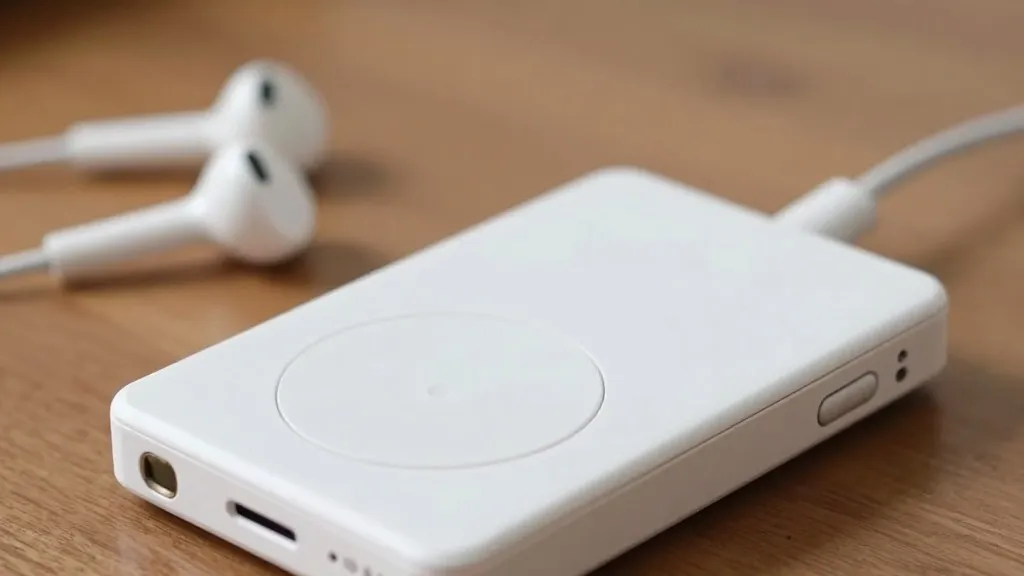
The introduction of the first Apple iPod on October 23, 2001, marked a pivotal moment in the evolution of personal technology.
The device emerged during a period of significant transformation for Apple, following the company's recovery from the dot-com bubble burst. By late 2001, Chief Executive Steve Jobs had successfully guided the firm into the Mac OS X era, with established product lines such as iBooks and iMacs performing well in the market. Jobs envisioned a future where the Mac would serve as the central hub for a user's digital lifestyle, connecting various peripherals including cameras, camcorders, and portable media players. He identified music as a critical target market with no dominant leader, noting that while competitors like Sony and Creative had entered the space, they had not yet perfected the user experience for digital audio.
At the time of the announcement, the portable music landscape was divided among CD players, MP3 CD players, flash-based devices, and hard drive-based systems. Jobs selected the hard drive approach as the most viable entry point, citing its superior storage capacity for the price. The device was positioned as a breakthrough that could hold an entire music collection in a pocket-sized form factor for $399. It supported standard audio formats of the era, including MP3, WAV, and AIFF, while delivering CD-quality sound.
The physical design of the original iPod was heavily influenced by a collaboration with Toshiba, which supplied a 1.8-inch ultra-compact hard drive that was only 0.2 inches thick. This component allowed Apple to create a device measuring 2.4 by 4 by 0.78 inches, roughly the size of a deck of cards. Weighing just 6.5 ounces, the player was notably lighter than most cell phones of that period. Despite its compact dimensions, the hardware included advanced features such as 20-minute skip protection and rapid file transfer capabilities.
Connectivity was a key differentiator, with the device utilizing a FireWire 400 cable for both data transfer and charging. Jobs claimed this connection was significantly faster than USB alternatives available at the time. While a USB transfer of a single CD's worth of MP3s could take approximately five minutes, the FireWire port enabled the transfer of the same data in five to 10 seconds. Filling the device's 5GB capacity with 1,000 songs at 160Kbps was estimated to take only 10 minutes, compared to five hours for a typical USB-based player.
Power management was handled by a rechargeable lithium-polymer battery, which provided up to 10 hours of continuous playback. Apple stated that the battery could be recharged to 80 percent in just one hour. The user interface was designed for minimalism and durability, featuring a scroll wheel with a piezoelectric clicker to provide tactile feedback. This allowed users to navigate playlists, artists, or songs with a single hand. During the unveiling, Jobs demonstrated the interface by playing 'Building a Mystery' by Sarah MacLachlan.
The product launch was accompanied by the release of iTunes 2, which introduced MP3 CD burning and synchronization capabilities. The Auto-Sync feature ensured that music libraries curated on a Mac remained consistent with the portable player during charging or data transfer sessions. Additionally, the device could function as an external FireWire hard drive, offering utility beyond music playback.
The original iPhone did not arrive until early 2007, more than five years after the iPod's debut. For over a decade, both devices coexisted in Apple's product lineup. However, the rise of the smartphone gradually diminished the necessity for a dedicated music player. The final model, the 7th-generation iPod Touch, was released in May 2019. Although the product line was left unmaintained for several years, it was officially discontinued in May 2022, concluding a 21-year product lifecycle that fundamentally altered how consumers interacted with digital media.
Source: Tom's Hardware